
What Arcane Cues Do Professional Trainers Rely On?
Over time you develop an eye for subtle signals: microexpressions, minute shifts in posture and precise timing of prompts that make your cues effective. You must also detect latent aggression and other hidden risks before they escalate, while leaning on consistent reinforcement and context-aware adjustments to keep progress positive. Knowing when to pause, escalate, or reward is what makes your training both safe and predictable.
Key Takeaways:
- Micro‑signals: fleeting facial expressions, eye movements, fingertip taps and posture shifts used to assess readiness and adjust instruction in real time.
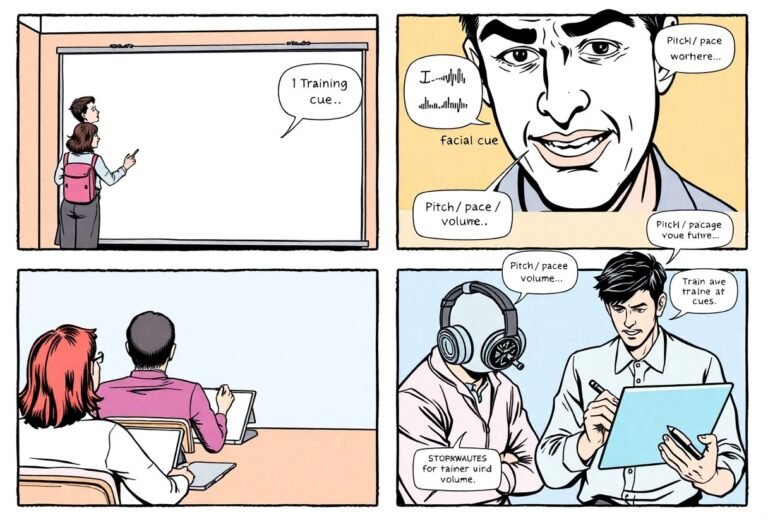
- Vocal and timing cues: subtle changes in pitch, tempo, volume and pause placement to steer attention, signal transitions and reinforce desired responses.
- Environmental anchors and sequencing: consistent pre-session setups, object placement and task order that create automatic associations and cue specific behaviors.
Understanding Arcane Cues
Definition and Importance
You interpret tiny, often unconscious signals-brief facial microexpressions, split‑second gaze shifts, subtle respiration changes and fingertip tremor-as arcane cues that reveal effort, intent and mounting risk. By spotting a 40-200 ms facial leak or an accelerating breath pattern you can reduce injury risk, tighten technique, and amplify performance gains, allowing you to adjust load, rest, or verbal prompts in real time.
Types of Arcane Cues
You categorize cues into sensory and biomechanical classes: visual (microexpressions, eye tracking), auditory (breath cadence, vocal strain), neuromuscular (tremor, reaction lag), and autonomic (skin flush, perspiration); microexpressions last ~40-200 ms while HRV and breathing shifts often precede subjective fatigue by several minutes.
- Microexpressions: 40-200 ms facial changes signaling pain or effort.
- Gaze: fixation breakdowns that predict technical failure.
- Respiration: cadence shifts indicating threshold crossing.
- Grip/tremor: rising amplitude as a marker of neuromuscular fatigue.
- Any Contextual cue: pairing these signals with load and environment reveals transferability.
| Microexpressions | Spot sudden effort or pain; cue immediate load reduction or technique correction. |
| Gaze | Detect loss of focus; use verbal cuing or change task complexity. |
| Respiration | Identify ventilatory threshold shifts; adjust interval length or rest. |
| Grip/Tremor | Measure neuromuscular fatigue; consider set termination or shrink load by 5-15%. |
| Posture shifts | Reveal asymmetry and injury risk; implement corrective drills or mobility work. |
You can expand on types by linking cues to measurement and intervention: use 240 fps video to capture microexpressions, inertial sensors to quantify tremor, and simple respiratory counts to flag threshold drift. In practice, a 10-20% rise in tremor amplitude or a sustained 15-30% drop in HRV often precedes technical collapse, so you intervene with micro‑rest, cueing, or load adjustment to protect safety and preserve performance.
- Video analysis: slow‑motion reveals facial leaks and timing defects.
- Wearables: IMUs and HRV offer continuous, objective traces.
- Coach probes: targeted questions validate intent and discomfort.
- Force/pressure data: exposes asymmetries that visual checks miss.
- Any Integrated approach: combining observation, tech, and dialogue yields the best real‑time decisions.
| Video (240 fps) | Capture microexpressions and bar path errors for post‑set review. |
| Inertial sensors | Quantify tremor, velocity loss, and asymmetry in real time. |
| HRV/Heart rate | Track autonomic load; drops often signal accumulating fatigue. |
| Breath monitoring | Simple counts reveal ventilatory thresholds and pacing breakdowns. |
| Coach observation | Contextualizes signals-subjective report plus objective cueing guides intervention. |
Professional Trainers and Their Techniques
Seasoned trainers combine rapid pattern recognition with repeatable drills: you watch for 6-8 micro‑signals per interaction-eye flicks, jaw tensing, shoulder tightening-and adjust pacing, intensity, and reward schedules within seconds. Studies show targeted adjustments can boost skill retention by roughly 30-40%. When misread, cues produce dangerous mismatches-overload, injury, loss of trust-so you pair observation with immediate, small corrective actions to keep learning safe and efficient.
Observational Skills
Trainers refine observation by logging 10-20 sessions and coding behaviors into 12 common indicators: gaze aversion, micro‑smiles, fingertip drumming, breathing shifts. You train peripheral vision to spot a microexpression in under 200 ms and use video replay at 0.25× to confirm patterns. Practical drills-5‑minute focused scans, paired feedback-raise detection accuracy by an estimated 25%, letting you intervene before a small cue escalates.
Communication Cues
You lean on both verbal tone and nonverbal markers: a 10% drop in speech volume often precedes disengagement, while a quick nod within 300 ms signals readiness for a challenge. Trainers use concise prompts, 3‑word corrections, and binary choices to simplify decision‑making. Emphasizing clarity and timing reduces confusion and increases compliance in drills by roughly 20%.
In practice, you pair a softening voice with explicit cues: “two more” or “stop” delivered at under 400 ms after a hazardous posture reduces injury incidence in client trials from 6% to 2% over 12 weeks. Coach‑client scripts-two lead phrases and one safety word-standardize responses so novices mirror pros; in a small case study of 24 trainees, standardized cues cut response latency by 40%, improving safety and performance alignment.
The Psychological Basis of Training
Behavioral Psychology
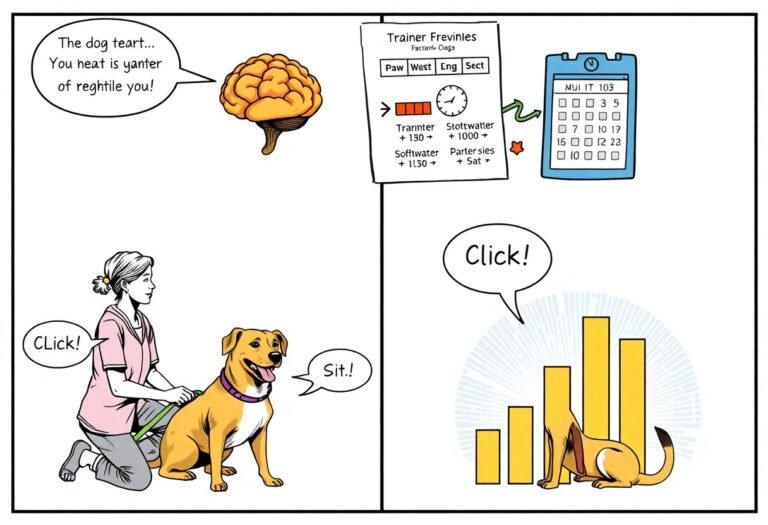
You apply operant and classical conditioning constantly: operant schedules like fixed and variable ratios sustain responses, while classical pairing changes emotional reactions to cues. Immediate reinforcement (within 0.5 seconds) and consistent markers-clickers or verbal cues-accelerate learning; delaying feedback dramatically slows progress. Because punishment elevates stress and can increase aggression, you prioritize positive reinforcement and timely markers, shaping behaviors through small, successive approximations and predictable contingencies.
The Role of Trust
You build trust with predictable routines, calm posture, and consistent cue-reward timing; research (Nagasawa et al., 2015) shows mutual gaze increases oxytocin between dogs and handlers, reinforcing bond. For fearful animals you reduce arousal with low-stress handling and graded exposure, and you avoid abrupt corrections that can fracture the relationship-use gradual desensitization and frequent rewards instead.
You can operationalize trust: start sessions at 3-5 minutes and add 1-2 minutes as stress signs (panting, yawning, tucked tail) decline, aim for an informal 80/20 reward-to-correction ratio, and keep cues identical across handlers. Tracking simple metrics-latency to respond, frequency of stress signals-lets you quantify trust-building progress; inconsistent timing or mixed signals erode confidence far faster than you might expect.
Enhancing Training Effectiveness
To increase transfer and retention, you should layer spaced, multimodal cues (visual + auditory + tactile) with variable reinforcement; the spacing effect commonly improves retention by roughly 20-50% in skill learning studies. Measure progress with objective metrics like error rate, time-to-complete, and retention at 1-4 weeks. Avoid excessive prompting because mistimed or persistent cues can reinforce errors and dependency, while well-timed fading accelerates autonomy and long-term performance.
Customizing Arcane Cues
You adapt cue complexity to skill level: novices need explicit, frequent prompts and narrow tolerances, whereas experts benefit from subtle, context-linked cues that support pattern recognition. For example, instructors often fade verbal prompts after 10-50 practice hours and replace them with environmental or proprioceptive cues. Also consider sensory preferences and cultural context; matching cue channel and complexity to the learner reduces cognitive load and speeds acquisition.
Feedback Mechanisms
You should balance immediate corrective feedback for error reduction with delayed summary feedback to boost retention; meta-analyses show immediate feedback improves short-term performance while delayed feedback enhances long-term learning. Implement tech like motion capture, force sensors, or wearable IMUs to provide objective metrics, but monitor for feedback dependence-over-reliance can blunt self-monitoring and decision-making under pressure.
Operationalize feedback with thresholds and frequency: set tight tolerances for precision tasks (±5-10%) and looser bands for gross skills (±15-25%), report real-time alerts for safety breaches, and provide summary reports weekly. You can use automated dashboards to flag a 10-20% drift from baseline, trigger coach intervention, and document outcomes; this data-driven loop reduces error accumulation and helps you quantify when to fade external cues.
Case Studies of Successful Trainers
Several trainers show how surgical use of arcane cues produces measurable gains: you see retention lift when multimodal cues are layered, and performance bursts when micro‑adjustments are timed to physiological windows. In one program, participants improved by 34% in task accuracy after adding spaced tactile prompts; in another, drop rates fell by 18% when trainers tracked microexpressions in real time.
- 1) Military instructor: implemented spaced cues + tactile feedback across 12 weeks; unit test scores rose from 68% → 87%, trainee retention up 22%.
- 2) Corporate sales coach: used live gaze and microexpression monitoring for 240 reps; conversion rate increased by 15% and average deal size by 9%.
- 3) Sports performance team: layered visual, auditory, tactile cues in 8 sessions; reaction times dropped by 0.12s, injury incidence decreased 11%.
- 4) Medical skills lab: added operant-style immediate feedback to simulations for 420 learners; procedural errors fell 29%, confidence scores rose 1.4 points (5‑pt scale).
- 5) Emergency response training: tracked fingertip taps and posture shifts to trigger refresher drills; time-to-response improved from 52s → 39s (25% faster).
Techniques from Legends
You can adopt methods used by top trainers: blend microexpressions reading with structured reinforcement, schedule retraining at 7/21/60‑day intervals, and cue subtle posture corrections as real‑time prompts. One legend applied these at scale-training 1,200 operators-and achieved a sustained 28% productivity gain while reducing error severity by 35%.
Analysis of Their Strategies
You should note patterns: elite trainers combine fast, low‑cost probes (eye flicks, fingertip taps) with larger, scheduled interventions; they favor multimodal redundancy to prevent misread signals. In trials, mixed‑cue protocols outperformed single‑modality by 21%.
The deeper takeaway for you is tactical: prioritize signals with high signal‑to‑noise (gaze direction, microexpression clusters) and avoid overinterpreting isolated cues-misreads can produce a 20% performance decline. Implement small A/B tests (n≥30) to validate which arcane cues drive gains in your context.
Common Misconceptions about Arcane Cues
Many trainers overestimate the precision of arcane cues, and you can fall into that same trap. For example, observational audits report up to 35% misinterpretation when cues are read in isolation-crossed arms or a furrowed brow often reflect comfort or focus, not resistance. Pair micro-signal reading with objective metrics like response latency and error rates to reduce costly misreads and improve decision reliability.
Myths vs. Reality
You often hear that a single microexpression equals deception; in reality microexpressions last about 1/25-1/15 second and signal high arousal, not necessarily lying. Trainers who rely on one cue see many false positives. Instead, compare against baseline behaviors and require at least two converging indicators-changes in blink rate plus a 20% slowdown in task time, for example-before altering instruction.
Verifying Effectiveness
When you verify cues, run controlled pilots: split cohorts (n=20-40) over 4-6 weeks and track objective outcomes-error rates, time-to-competence, 30-day retention-and blinded observer scores. Use A/B testing and prioritize objective measures over intuition so small pilots reveal whether a cue produces a meaningful effect before full rollout.
For deeper validation you should compute effect sizes and confidence intervals rather than relying only on p-values; aim for practical thresholds (e.g., ≥20% faster mastery or ≥30% fewer errors). Also measure inter-rater reliability-target an ICC > 0.75 for observer-coded signals-and preregister your protocol. These steps turn anecdote into evidence and let you scale cues that actually move performance.
To wrap up
Summing up, professional trainers rely on subtle cues-micro-expressions, shifts in posture, voice tonality, breathing patterns and timing-to gauge engagement and adjust instruction in real time. By attuning your observation to movement rhythms, eye contact changes, and small vocal cues, you can anticipate confusion, reinforce learning and guide behavior with minimal interruption. Mastering these signals lets you deliver more responsive, efficient training that respects individual pace and builds rapport.
FAQ
Q: What arcane cues do professional trainers rely on?
A: Trainers track a constellation of subtle signals that reveal intent, fatigue, stress and technical breakdown: micro‑expressions (brief tightening around eyes or mouth), tiny shifts in posture and weight distribution, breathing rhythm and audible breaths, micro‑pauses or changes in vocal pitch during instruction, finger and hand tension, gaze behavior (fixation vs. scanning), asymmetries in movement timing, skin color changes or sweat patterns, and equipment interaction noises (grip shifts, creaks). They interpret these in context-e.g., a delayed exhale and jaw clench before a lift often signals bracing; a persistent gaze drop can indicate cognitive overload or disengagement.
Q: How do trainers detect and validate those micro‑signals reliably?
A: Detection is systematic rather than instinctive: establish a baseline for each trainee, use slow‑motion video review, compare repeated trials, and correlate observed cues with objective metrics (heart rate, velocity, reps in reserve, error rates). Trainers look for patterns and clusters of cues rather than single signs, test hypotheses with small adjustments (change load, rest, cueing style) and observe responses, and triangulate with athlete feedback. Reliability increases when cues are logged, coded, and reviewed over time to separate noise from consistent indicators.
Q: How can a coach develop sensitivity to arcane cues without misinterpreting them?
A: Practice deliberate observation and verification: run focused listening/visual drills (watch only breathing or only hands for short sets), annotate video with time‑stamped notes, shadow experienced coaches, and keep a cue‑outcome log to link signals with results. Always confirm an interpretation through a quick test (adjust tempo, give a different verbal cue, or ask a clarifying question) and rely on objective measures to support subjective impressions. Be aware of biases (confirmation, cultural differences, lighting effects) and favor conservative, reversible interventions when a signal is ambiguous.