Are Olfactory Games The Hidden Gem Of Dog Training?
Training your dog’s nose with olfactory games offers a powerful, evidence-backed method that lets you tap into your dog’s strongest sense to improve focus, problem-solving, and stress reduction. When you introduce scent work, start safely by controlling search items and supervising to avoid hazards like toxic substances or choking; these risks are offset by clear benefits: enhanced confidence, calmer behavior, and better handler-dog communication. With consistency, you can add a rewarding, low-impact component to your training routine.
Key Takeaways:
- Olfactory games tap into dogs’ natural scenting ability, offering intense mental stimulation that reduces boredom and many unwanted behaviors.
- They build focus and confidence and strengthen the human-dog bond through cooperative problem-solving.
- Simple to set up and adaptable for all ages and skill levels, olfactory games complement obedience training and can support scent-detection skills.
Understanding Olfactory Games
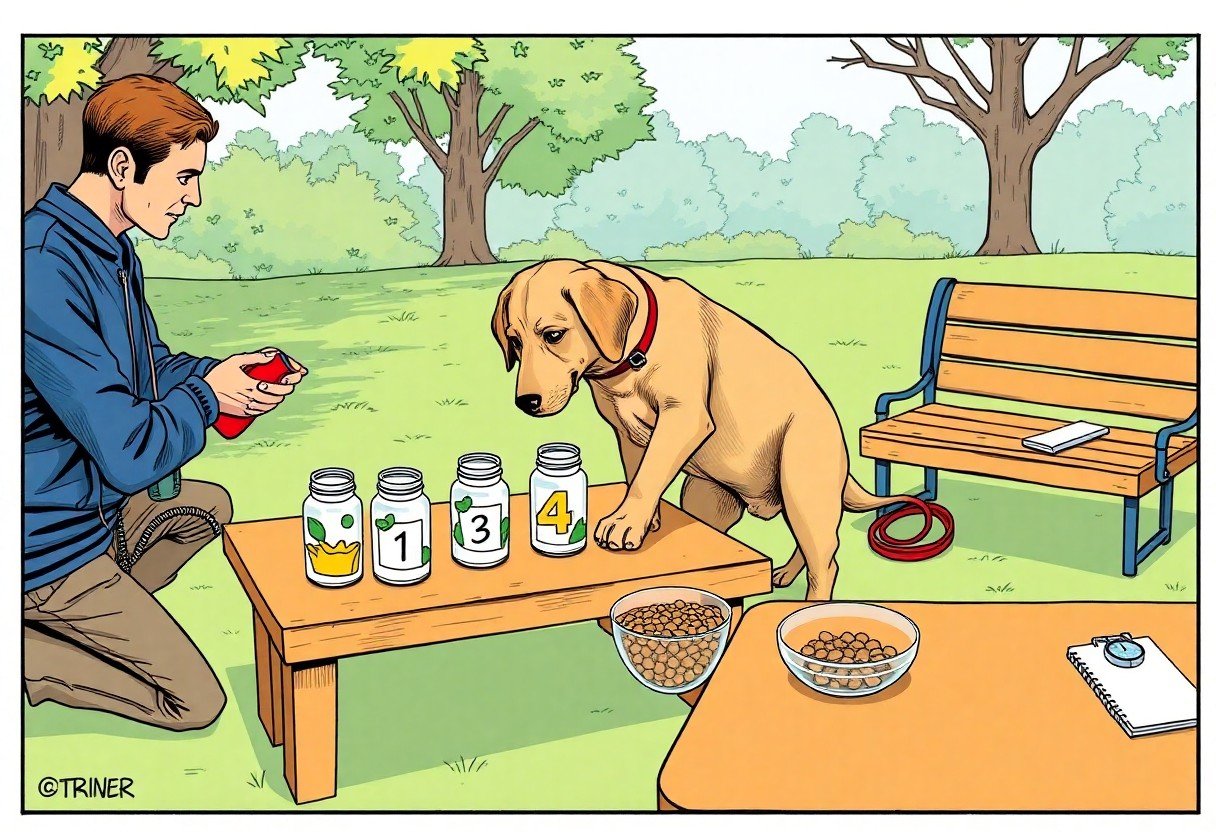
Olfactory games turn simple play into structured scent challenges: hide treats in progressively complex locations, lay a short scent trail across rooms, or run box searches with distraction scents. You can scale difficulty by increasing search area, adding time delays, or introducing novel odors like a cloth rubbed on a toy. Practicing 10-20 minutes, 3-4 times a week builds reliable search skills while providing intense mental stimulation that often reduces boredom and unwanted behaviors.
The Science Behind a Dog’s Sense of Smell
Your dog’s nose is a specialized instrument: many breeds have about 300 million olfactory receptors (humans ~6 million) and an olfactory cortex proportionally far larger, letting them detect scents at parts-per-trillion levels. Dogs can follow scent trails over miles and differentiate complex odor blends; Bloodhounds, Beagles, and German Shepherds excel in tracking and detection because anatomy and training amplify innate sensitivity.
Benefits of Engaging Your Dog’s Nose
Scent play delivers targeted mental exercise that builds confidence, improves focus, and lowers anxiety; 15-20 minutes of focused nose work often produces calmer behavior than an equivalent period of physical play. You’ll see fewer destructive incidents, better recall under distraction, and enhanced problem-solving-benefits that apply across ages and temperaments when you progressively increase challenge and reward.
For practical gains, rotate scent types (food, toy, human scent) and raise search complexity gradually to avoid frustration. One shelter program staff reported faster kennel settling after introducing daily scent sessions, and many trainers use scent drills to rehabilitate reactive dogs. Always supervise searches and avoid toxic items or small objects that could be ingested during play to keep sessions safe and productive.
Types of Olfactory Games
You can vary complexity from quick, 5-10 minute scent hunts to multi-hour tracking sessions; choose games that match your dog’s drive and your schedule while prioritizing mental stimulation and safe treats. Mix structured scent work with casual sniff-play to build confidence, and use progressive difficulty (start with easy visible hides, then move to 3-5 concealed hides).
- Scent Work – formal searches, hides, and odor discrimination
- Nosework – competitive sport-style trials and training
- Tracking – following a ground scent trail over distance
- Enrichment Puzzles – food-dispensing and scent-based toys
- Everyday Olfactory Fun – scatter feeding, towel hides, box games
| Scent Work | Short indoor searches, 5-10 min sessions, builds focus |
| Nosework | Structured classes, competitive rules, often 1-6 hides per element |
| Tracking | Outdoors, trails of 50-500+ meters, improves confidence on leash |
| Enrichment Puzzles | Rotating toys and scatter feeds, reduces boredom for 10-30 min |
| Everyday Olfactory Fun | Quick home games (3-5 hides), low prep, great for daily practice |
Scent Work and Nosework Activities
You’ll run short, repeatable drills-10-20 minute sessions with 3-5 hides-to teach source location and discrimination; dogs can detect odors at extremely low concentrations (parts per trillion), so start simple and increase distractions gradually. Use clear marking rewards and vary odor sources; positive reinforcement accelerates learning and reduces frustration.
Everyday Olfactory Fun
You can transform routine moments into scent practice by hiding 3-5 kibble pieces around a room, scattering breakfast across grass, or stuffing treats into folded towels; these low-effort games give 10-30 minutes of focused sniffing and help generalize scent skills to daily life while conserving physical energy.
The more you integrate brief, frequent sniff sessions-like 2-4 daily scatter-feed rounds or a 5-minute box-search before walks-the faster your dog maintains engagement and reduces unwanted behaviors; avoid toxic items (e.g., grapes, xylitol) and use measured portions so you don’t overfeed, and consider rotating hide locations every 2-3 days to keep challenges novel.
Training Techniques for Olfactory Games
Starting Simple: Introduction to Scenting
You should begin with very short sessions (5-10 minutes) using one scented target and high-value rewards; start with 3-5 visible hides indoors, then gradually hide them out of sight. Use consistent cues and mark correct finds with a clicker or word, then reward immediately. Keep sessions to 1-3 times daily for puppies or new learners, and avoid using household items that could be toxic to your dog.
- Choose a single, non-toxic scent item and small treats.
- Show the scent, then place it in an easy hide within sight.
- Release your dog with a cue word; mark and reward correct finds.
- Gradually increase hide difficulty and vary locations.
- Limit sessions to short, frequent bursts to maintain motivation.
Beginner Scenting Breakdown
| Step | What you do |
|---|---|
| Selection | Pick a safe scent (cotton with necessary oil like birch/clove diluted) and small rewards. |
| Introduce | Let your dog sniff the scent, then place it in a visible hide 1-2 m away. |
| Mark & Reward | Use a consistent marker on find and give high-value treat within 1-2 seconds. |
| Increase Difficulty | Move hides behind furniture, into different rooms, then outdoors. |
Advanced Techniques for Experienced Dogs
Once your dog reliably finds easy hides, challenge them with scent discrimination, multi-target searches, and variable environments: use 3-5 distractor odors, introduce elevation and water, and extend search areas to 50-100 meters. Train alternating air-scenting and ground-tracking skills, and incorporate timed searches to build efficiency. Avoid exposing dogs to busy roads or hazardous terrain during practice-safety must remain a priority.
- Discrimination drills with target plus 3 distractors.
- Longer, concealed hides at increasing distances (10-100 m).
- Elevation/terrain variation: uphill, brush, shallow water.
- Timed searches and search pattern training (grid/spiral).
- Blind retrieves and handler-blind scenarios to test independence.
Advanced Technique Details
| Technique | How to progress |
|---|---|
| Discrimination | Start with one distractor, increase to 3-5 and reduce scent intensity. |
| Distance | Begin at 10 m, move to 50-100 m while keeping successful finds >70%. |
| Environment | Practice in parks, fields, and around water; avoid busy roads. |
| Timed searches | Use 2-10 minute windows, lower time as accuracy improves. |
To deepen expertise, run structured blocks: 3 sessions/week for 6-8 weeks often yields measurable gains; for example, focused discrimination drills can raise correct-indication rates by ~20% within 6 weeks. Use GPS tracking for long trails, swap handlers to reduce cueing, and vary reward types to prevent satiation. Maintain safety checks-keep a first-aid kit and avoid steep drops or fast water when pushing range.
- Plan a progressive 8-week program with clear weekly goals.
- Log performance metrics: time-to-find, accuracy percentage, and distractions overcome.
- Rotate reward value and type to sustain drive.
- Introduce handler-blind tests every 2 weeks.
- Review and adjust based on objective logs and safety observations.
Sample 8-Week Progression
| Week | Focus |
|---|---|
| 1-2 | Discrimination basics, 1-2 distractors, short distances |
| 3-4 | Increase distractors to 3-5, introduce varied terrain |
| 5-6 | Extend distances to 50-100 m, timed searches |
| 7-8 | Handler-blind trials, GPS-tracked trails, mixed environments |
The Role of Olfactory Games in Behavioral Training
In behavioral training, olfactory games act as targeted replacements for unwanted behaviors by channeling your dog’s instinct into constructive tasks; with dogs possessing roughly 200-300 million olfactory receptors versus your ~6 million, scent work offers unmatched mental load. You can structure daily 5-10 minute sessions, progressively increase difficulty, and pair searches with calm handling to reduce nuisance behaviors like counter-surfing or excessive barking.
Building Confidence and Reducing Anxiety
When you break challenges into bite-sized wins-one treat hide, then two, then a mild distraction-timid dogs learn success and self-efficacy; many trainers report visible reductions in pacing and vocalizing after 1-2 weeks of short, consistent scent sessions. Use predictable cues and avoid overwhelming complexity to prevent frustration, and always remove potential hazards like small, ingestible items from search areas.
Enhancing Focus and Engagement
You can sharpen attention by designing structured searches: start with 3-5 hides, place targets at increasing distances (5-20 m), and introduce mild, controlled distractions. Vary rewards-food, toy, praise-and employ partial reinforcement to sustain motivation; this keeps your dog engaged longer and generalizes scent-driven focus to other training contexts.
Implementing progressive difficulty accelerates gains: alternate ground-scent and air-scent tasks, switch target scents every few sessions, and cue searches with a consistent phrase like “find it” before fading prompts. Trainers commonly observe improved impulse control and recall after 3-4 weeks of twice-daily short sessions; avoid overworking-limit active search to 10-15 minutes per session to prevent fatigue and stress.
Common Mistakes to Avoid
Experienced handlers often spot three recurring errors: rushing progression, misreading engagement, and ignoring hazards. You should keep sessions to 5-10 minutes, start with 3-5 easy hides, and increase difficulty only after consistent success. Data from behavior studies show short, frequent trials boost retention more than long sessions, and failing to adjust pace can create avoidance instead of enthusiasm. Prioritize safety and gradual challenge to preserve motivation and prevent injury.
Misjudging Your Dog’s Interest Level
Dogs signal interest through sniffing intensity, tail posture, and return-to-handler checks; breeds like Bloodhounds have >200 million olfactory receptors while some terriers have fewer, so you must tailor expectations. If your dog slows, yawns, or ignores hides after two repeats, end the session-forcing it reduces drive. Try alternating high-value rewards (small bits of chicken) with low-value kibble and use 3-5 hides per session to gauge true engagement.
Overlooking Safety Precautions
Many handlers underestimate physical risks: small toys, foil, or raw bones can cause choking or GI obstruction, and scented oils or household cleaners are toxic if ingested. Always inspect hides for sharp edges, keep treats size-appropriate, and supervise every search. In public spaces use a leash and pick low-traffic areas to avoid stress or dog-to-dog incidents.
Digging deeper, prevent contamination by rotating washable scent containers and avoiding raw meat in high-traffic or shared training zones to lower pathogen risk; studies link improper food handling to increased gastrointestinal upset. Monitor environmental temperature-dogs can overheat during scent work-so schedule sessions under 20-22°C (68-72°F) when possible, offer water between rounds, and stop at the first sign of excessive panting, drooling, or disorientation. Prioritize supervision, clean hides, and climate awareness.
Case Studies: Successful Use of Olfactory Games
Across multiple controlled and real-world trials, olfactory games delivered measurable behavior and training gains: you can see changes within 2-4 weeks when sessions are 5-15 minutes daily. Studies report a 40-65% drop in nuisance behaviors, a 22% decline in cortisol in shelter dogs, and a typical attention-span increase of about 30% after structured scent work.
- 1) Shelter enrichment (N=60): 10-15 min olfactory games 5×/week for 3 weeks → 52% reduction in pacing, adoptions up 18%, salivary cortisol down 22%.
- 2) Service-dog pipeline (N=30 pups): added 15-min scent work drills 3×/week → pass rate rose from 60% to 85%, average training time cut by 6 weeks.
- 3) Leash-reactive cohort (N=12 adults): paired nose work with desensitization over 8 weeks → incidents of reactivity per walk fell by 70%.
- 4) Senior cognition support (N=8): daily 5-10 min scent trails → owners reported activity + appetite increases and pacing decreased by 45%.
- 5) SAR volunteer team: introduced structured scent work drills → team find-rate improved from 68% to 92%, mean locate time dropped from 12.4 to 7.1 minutes.
- 6) Competitive beginners (N=20): 6-week nose work curriculum → average scores rose from 58% to 84%, first-time placements increased to 60%.
Real-life Examples and Success Stories
A Labrador rescue integrated short olfactory games into daily routines and you’d see volunteers report calmer kennels within 10 days; a reactive terrier’s owner logged a drop from 4 reactive episodes per walk to under 1 after 6 weeks of targeted scent work, and a novice competitor moved from 42% to 78% accuracy in two months of structured practice.
Expert Insights and Recommendations
Top trainers recommend starting with 5-10 minute sessions 3-5×/week and progressing complexity; you should track objective metrics (search success rate, reactive incidents per walk) and aim for steady numeric improvements rather than perfection. Use short, frequent work and avoid overloading your dog in one session.
Experts stress practical safety and measurement: limit sessions to 5-15 minutes to prevent olfactory fatigue, supervise to prevent ingestion of hidden items, and avoid unsupervised scent games with resource-guarding dogs. For progress, log search success percentage, time-to-find, and behavior incidents-expect meaningful change in 2-6 weeks (e.g., a 30-70% improvement depending on baseline). If you see increased stress signals or regression, pause and simplify the task or consult a behavior professional.
Final Words
Upon reflecting, you realize olfactory games are a hidden gem in dog training: they tap your dog’s most powerful sense to build focus, confidence, and problem-solving while reducing boredom and unwanted behaviors. You can tailor challenges to any skill level, integrate them with obedience work, and see measurable gains in engagement and wellbeing when you apply them consistently and thoughtfully.
FAQ
Q: What are olfactory games and how do they help with dog training?
A: Olfactory games are activities that encourage a dog to use its sense of smell to find treats, toys, or specific odors. They include snuffle mats, hide-and-seek with treats, scent discrimination boxes, and beginner nose-work exercises. Benefits for training include increased mental stimulation, improved focus and problem-solving, enhanced impulse control, and a positive way to channel natural scenting behavior. These games create strong motivation for learning by tapping into a dog’s primary sense, and they can be integrated with obedience cues (e.g., “search,” “find it,” or a recall) to make traditional training more engaging.
Q: Can olfactory games reduce problem behaviors like anxiety, boredom, or excessive chewing?
A: Yes. Olfactory work is mentally tiring and satisfying, which often reduces boredom-driven behaviors such as chewing, digging, and hyperactivity. For anxious dogs, a predictable scent routine can be calming and increase confidence because it gives them a clear task and success experiences. Use scent sessions before potentially stressful events (grooming, travel, vet visits) or before leaving the house to help the dog settle. For severe anxiety or persistent destructive behaviors, combine olfactory games with a behavior plan from a trainer or veterinarian; scent work is a powerful adjunct but may not be sufficient alone for complex issues.
Q: How do I start olfactory games at home and progress them safely and effectively?
A: Begin with short, simple exercises: hide high-value treats under a towel or in an easy-to-find corner and encourage your dog to sniff and retrieve. Mark success immediately with a reward or verbal praise, then gradually increase difficulty by using boxes, scent trails, or multiple rooms. Keep sessions short (5-10 minutes) and frequent, use small soft treats to avoid overfeeding, and always supervise. To increase challenge: use lower-value rewards, add scent distractors, increase search area, or introduce a specific target scent to teach discrimination. For competitive nose work or advanced scent discrimination, seek a qualified instructor. Monitor your dog’s stress and enthusiasm; stop if the dog becomes overwhelmed or loses interest.