How Does Neuroplasticity Play A Role In Puppy Learning?
Over the first months, your puppy’s brain is highly plastic, so the socialization window (3-14 weeks) is the most impactful for shaping temperament; inconsistent care or early fear experiences can produce lasting anxieties, and positive, repeated training builds reliable neural pathways for obedience and confidence, which you can intentionally reinforce through timing, consistency, and gentle exposure.
Key Takeaways:
- Neuroplasticity causes rapid brain remodeling during puppies’ sensitive periods, so early socialization and gentle exposure strongly shape future behavior.
- Consistent practice and positive reinforcement strengthen targeted synaptic connections, helping desired behaviors become reliable habits.
- Enriched, varied experiences promote synaptogenesis and cognitive flexibility, while insufficient stimulation can bias neural circuits toward fear and avoidance.
Understanding Neuroplasticity
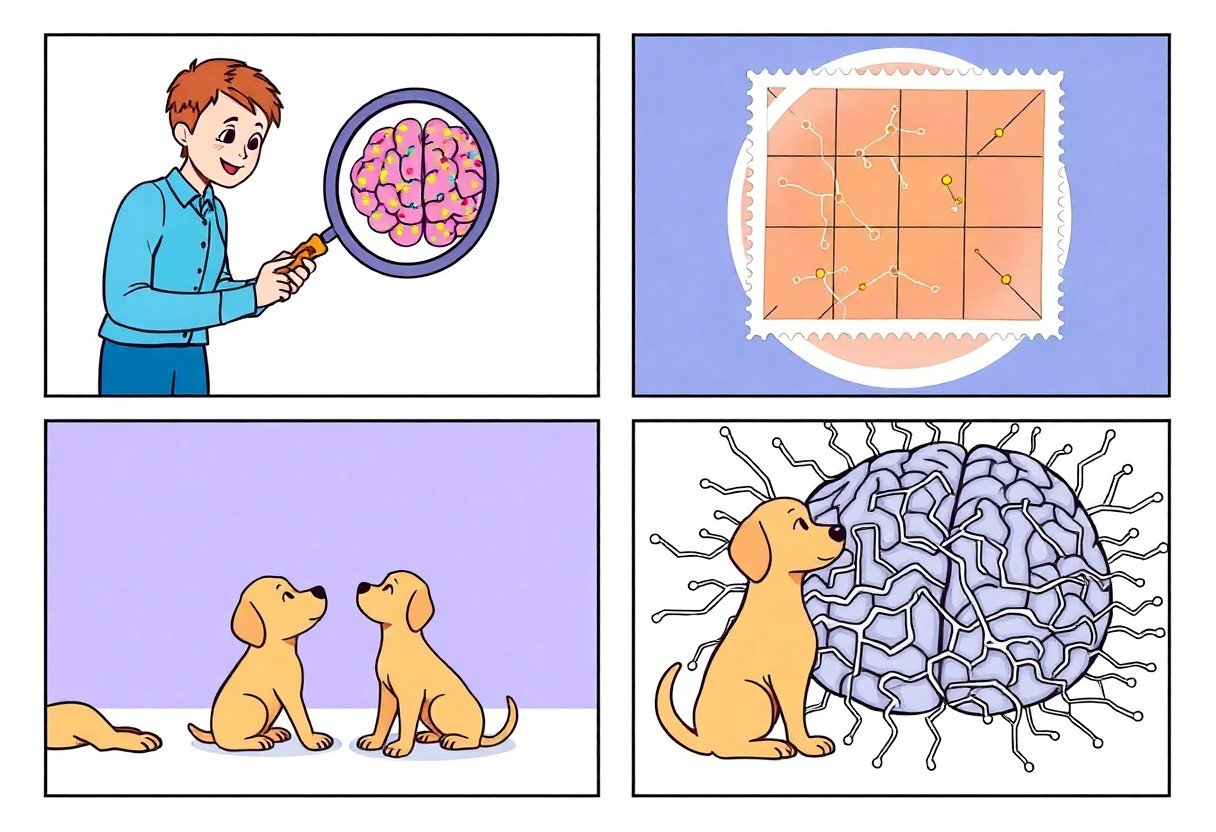
Neuroplasticity in puppies means your pup’s brain is actively forming and pruning circuits as it encounters sights, sounds, and people; the socialization window (about 3-14 weeks) is when those circuits change fastest. Experience-driven changes can produce lasting positive traits like confident social behavior, but early fear conditioning can also create persistent avoidance patterns that are harder to reverse later.
Definition and Mechanisms
Synaptogenesis, synaptic pruning, long-term potentiation (LTP) and myelination work together to rewire the puppy brain: repeated practice strengthens pathways while unused connections weaken. At the cellular level, NMDA receptor activity and calcium signaling trigger gene expression for structural change. For training, aim for 10-20 short repetitions per cue across multiple days to move learning from short-term LTP toward more stable structural change.
Importance in Learning
Because plasticity is higher early on, you can shape basic obedience, social tolerance and fear responses much more efficiently than in adulthood; rapid exposure to varied, positive stimuli makes desired pathways dominate. Practical examples include exposing your pup to 30+ calm new people and objects during the socialization period to reduce future reactivity and build reliable recall under distraction.
In practice, structure learning with 5-10 brief sessions daily, reward within 1-2 seconds of the desired behavior, and progressively increase challenge to consolidate circuits into durable habits. If your pup experiences intense uncontrolled fear during sensitive weeks, expect that reversing those neural patterns will require longer, systematic counterconditioning and may never fully mirror the ease of initial positive shaping.
Neuroplasticity and Puppy Development
During the early months your pup’s brain is sculpted by experience: synaptic pruning and growth peak during the 3-14 week sensitive window and continue shaping through adolescence. You should aim for short, varied exposures-10-15 minutes daily of new sights, sounds, and people-to strengthen desired circuits. Negative or overwhelming events can create long-lasting fear pathways, while consistent, gentle practice produces increased resilience and faster learning.
Critical Periods for Learning
Between roughly 3-14 weeks puppies absorb social and environmental information most readily, with a notable fear-sensitivity spike around 8-11 weeks and another during adolescence (6-14 months). You should introduce novel people, surfaces, and handling gradually; missing these windows raises risk of later phobias. Short, repeated positive encounters are far more effective than a single long session when shaping durable responses.
Impact on Behavior and Training
Neuroplasticity means patterns you reinforce become habitual: using positive reinforcement after desired behavior strengthens those circuits, while repeated stressful experiences potentiate avoidance. Structure training into 5-15 minute sessions several times daily so your puppy consolidates learning without fatigue. You should expect faster retention for behaviors practiced with clear cues, consistent timing, and immediate rewards.
For practical impact, target exercises that build core circuits: name recognition (often learned after 30-50 repetitions across days), loose-leash walking practiced in increasing distractions, and gradual crate habituation. You must maintain consistency-random timing or mixed cues slows consolidation-and minimize high-stress exposures because elevated cortisol impairs synaptic formation, reducing training effectiveness.
Practical Applications of Neuroplasticity in Puppy Training
You can turn neuroplasticity into a training advantage by designing short, frequent experiences that shape circuits during the sensitive window (roughly 3-14 weeks). Use 5-10 minute sessions, 3-5 times daily to teach basic cues, and pair novel sights or sounds with high-value treats so positive circuits form quickly. Watch for stress signals – stop or back off if your puppy freezes, whines, or hides – because forced exposure risks forming fear pathways instead of helpful associations.
Training Techniques that Leverage Neuroplasticity
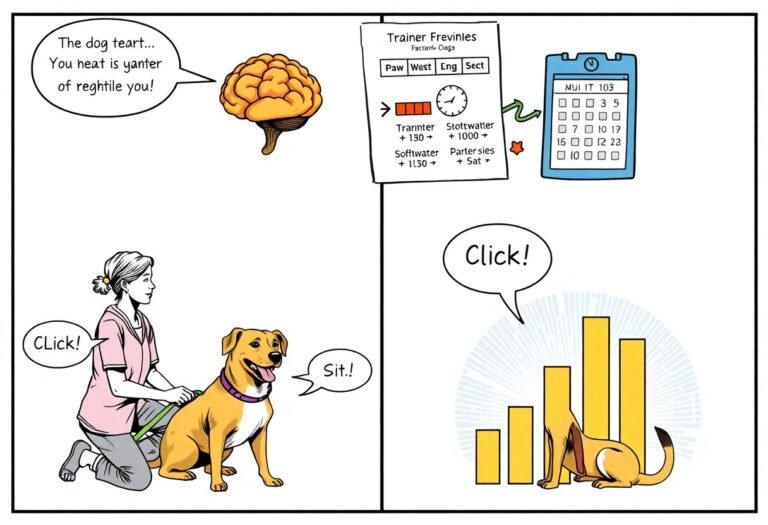
Shaping and clicker training exploit rapid synaptic changes by rewarding incremental approximations; mark desired movement within 0.5-1 second for best timing. Counterconditioning and graded desensitization work well: present the stimulus at a low intensity, reward calm responses, then increase intensity over days. Enrichment (novel toys, varied surfaces) and variable reinforcement schedules help generalize behaviors so circuits remain flexible across contexts.
Role of Consistency and Repetition
Consistent cues and repetition strengthen the exact neural pathways you want: use the same word, gesture, and reward pattern so the brain links signal to action. Prefer spaced, brief practice (multiple 5-minute blocks) over single long sessions; this spaced training enhances retention and reduces fatigue. Aim for daily repetition across weeks to convert fragile new connections into stable habits.
For example, house training benefits from a predictable routine: take your puppy out every 2 hours and immediately reward successful elimination, and you should see measurable progress within 7-14 days. For recall, do 5-10 short trials in a quiet area before gradually adding distractions; increasing difficulty slowly leverages plasticity without triggering stress. Avoid harsh punishment, since it can create persistent fear circuitry and undo progress.
The Brain’s Response to Environmental Stimuli
Environmental input reshapes synaptic connections in puppies within days to weeks, especially during the 3-14 week window; repeated exposure to sounds, surfaces, and people drives rapid circuit strengthening while lack of exposure causes pruning of those pathways. You should provide short, varied sessions-for example, 5-10 minutes of novel surfaces and gentle noises daily-because early fearful experiences can produce long-lasting avoidance if not handled with calm, graded exposure.
Socialization and Interaction
During socialization you need to introduce your puppy to diverse people, animals, and settings in positive increments: children, men with beards, people in hats, different dog sizes, and busy streets. Aim for multiple brief encounters each day-three to five 5-10 minute sessions-so your pup associates variety with safety. Positive, predictable interactions increase approach behavior and reduce later fear-based reactivity, while unpredictable scares heighten sensitivity.
Influence of Positive and Negative Reinforcement
Positive reinforcement-treats, praise, clicker timing-builds desired behaviors by adding rewards immediately after the action; negative reinforcement works by removing an aversive (e.g., releasing leash pressure when your pup stops pulling). You should favor reward-based methods because they accelerate learning and bond-building, whereas reliance on aversives risks stress responses and can embed avoidance or aggression over time.
More specifically, reward-focused training produces faster retention and more reliable recall under distraction: short, frequent treat-and-praise trials (10-15 repeats per session) increase success rates. Watch for stress signals-whale eye, lip-licking, frozen posture-which indicate an aversive is too strong. Adjust by lowering intensity, increasing reward frequency, and using gentle counter-conditioning to replace fear with positive expectancy.
Neuroplasticity Across the Lifespan of a Dog
Across a dog’s life, neuroplasticity shifts from rapid network formation in early months to targeted, experience-driven remodeling later on. You see the fastest changes during the first 6-16 weeks, while many breeds reach behavioral maturity between 12 and 24 months (large breeds toward the upper end). Functional imaging shows adult dogs still modify cortical responses after training, so negative experiences can create long-lasting fear circuits and positive, reward-based learning builds durable, adaptive pathways.
Changes from Puppyhood to Adulthood
During puppyhood your pup overproduces synapses, then pruning and myelination refine circuits; the socialization window from about 3-12 weeks and fear periods at 8-10 weeks strongly shape responses. Adolescence (roughly 6-18 months) often brings impulsivity and boundary-testing, with larger breeds maturing later. If you expose your pup to chronic stress during sensitive windows you risk embedding long-term anxiety, whereas steady, reward-based practice strengthens self-control and resilience.
Continuous Learning and Adaptation
Even as an adult, your dog’s brain remains plastic: you can teach new commands, adapt problem-solving, and mitigate unwanted habits. Short, consistent sessions-5-10 minutes twice daily-drive measurable gains, and activities like scent work or agility keep circuits flexible. Be aware that neglect or unpredictable punishment can reinforce fearful or avoidant behaviors, while positive enrichment produces lasting cognitive benefits.
Older dogs retain significant capacity for change: with structured practice-10-15 minute sessions over 2-4 weeks-you can teach an older dog 4-6 new cues or noticeably improve reliability. Combine multi-sensory enrichment (scent puzzles, short obstacle sequences, food-dispensing toys) and randomized rewards to engage hippocampal and prefrontal networks. Working breeds often show extended plasticity into 3-5 years, so scale challenge difficulty gradually, watch for stress signals, and prioritize positive reinforcement to consolidate learning without triggering avoidance.
Challenges and Limitations of Neuroplasticity in Training
Factors that Affect Neuroplastic Changes
Genetics, age, and the quality of early experiences directly shape how your puppy’s brain rewires; puppies under 16 weeks show higher synaptic density and quicker social learning, while older animals form habits more slowly. Consistent repetition and timely reinforcement strengthen circuits, whereas chronic stress or untreated pain can reduce plasticity in measurable ways. Short, frequent sessions (5-10 minutes, 3-5× daily) maximize retention. The window for rapid change narrows quickly without consistent practice.
- Age: sensitive period ~3-16 weeks affects socialization and fear bias
- Genetics: breed and lineage influence trainability and anxiety risk
- Environment: enrichment accelerates adaptive wiring; deprivation impairs it
- Stress: chronic stress impairs learning and memory consolidation
- Repetition: spaced practice strengthens synapses better than massed trials
- Reinforcement: immediate, high-value rewards speed circuit stabilization
Addressing Learning Difficulties in Puppies
If your puppy shows slow progress, start with a veterinary exam to rule out hearing, vision, or pain-medical causes account for about 5-10% of training failures. Then implement short, focused sessions (5-10 minutes, 4-6× daily), use high-value treats, and apply desensitization and counterconditioning for fear responses. Engage a certified behaviorist for persistent issues and avoid aversive methods that can reduce neuroplastic potential.
Dive deeper by tracking objective metrics: log correct responses per session and aim for a 10-20% improvement week-to-week; if no progress after 4-6 weeks, escalate care. Use clicker or marker training to improve timing, manage the environment to reduce triggers, and pair brief handling with rewards to rebuild positive associations. Seek immediate help for signs of aggression or self-injury; targeted medical or behavioral interventions (e.g., analgesics, desensitization plans) often restore learning capacity faster than prolonged punishment.
Conclusion
The rapidly changing neural networks in a puppy make learning most effective when you provide consistent, positive experiences; your timing, repetition, and social interactions shape synaptic connections, reinforce desired behaviors, and help your puppy generalize skills across situations, so focused training, environmental enrichment, and patience let you harness neuroplasticity to build reliable habits and adaptability throughout development.
FAQ
Q: What is neuroplasticity and how does it affect a puppy’s ability to learn?
A: Neuroplasticity is the brain’s capacity to reorganize its structure and function in response to experience. In puppies this shows up as rapid synapse formation, pruning of unused connections, and progressive myelination that improves signal speed. During early sensitive windows-especially the first 3-16 weeks-exposures and interactions shape social preferences, fear thresholds, and basic cognitive maps. Repeated practice strengthens specific neural pathways (making behaviors easier to perform), while lack of exposure leads to pruning of circuits for unused skills. Stress hormones can impair plasticity, whereas adequate sleep, balanced nutrition, and predictable, low-threat learning contexts support memory consolidation and adaptive rewiring.
Q: How do training methods leverage neuroplasticity to teach puppies effectively?
A: Effective training aligns with how brains change: short, frequent sessions produce more reliable synaptic strengthening than long single sessions; immediate, consistent reinforcement (treats, praise, play) links actions to outcomes and accelerates associative learning; shaping and successive approximations guide new behaviors by reinforcing incremental improvements. Desensitization and counter-conditioning replace maladaptive fear circuits by pairing low-level exposures with positive outcomes, gradually shifting emotional responses. Variable reinforcement schedules later in training promote retention and resistance to extinction. Avoidance of harsh punishment prevents formation of fear-based pathways that block flexible learning.
Q: What practical steps can owners take to support neuroplasticity and maximize puppy learning?
A: Provide a mix of controlled social exposures (different people, animals, surfaces, noises) during the socialization window, using gradual increases in intensity and positive reinforcement for calm responses. Structure multiple short training sessions daily (2-5 minutes each) focused on one skill, with clear cues and immediate rewards. Ensure routine sleep and rest for consolidation, balanced puppy nutrition, and enrichment that encourages problem solving (puzzle feeders, scent games, supervised exploration). Keep training predictable across caregivers to reduce confusion, minimize chronic stressors, and consult a veterinarian or qualified trainer if fear or aggression appears early so interventions harness plasticity rather than entrenching harmful patterns.