How Can Tactile Communication Revolutionize Dog Training?
Communication through touch gives you precise, intuitive ways to guide your dog, enabling faster learning and a deeper bond while offering safer redirection to prevent accidents; however, applied incorrectly it can cause confusion or fear that escalates to aggression, so you must learn timing, pressure and intent to use it effectively.
Key Takeaways:
- Tactile signals (pressure, taps, guided contact) create immediate, clear cues that strengthen the handler-dog bond and work well in noisy environments or with deaf dogs.
- When paired with consistent timing and positive reinforcement, touch accelerates learning and improves focus by providing precise, somatosensory feedback.
- Effective use requires gentle, consistent signals tailored to the dog’s sensitivity; avoid forceful contact, integrate with rewards, and adjust for individual and breed differences.
Understanding Tactile Communication
Integrating touch into your sessions gives you a precise, low-noise channel to shape behavior: short, consistent tactile cues-often lasting 1-2 seconds-clarify timing and intent, reduce confusion in high-distraction settings, and make transitions between cues smoother. Trainers using tactile methods often report faster in-session corrections and better focus from dogs that struggle with verbal cues, especially in noisy environments or with deaf animals.
Definition and Importance
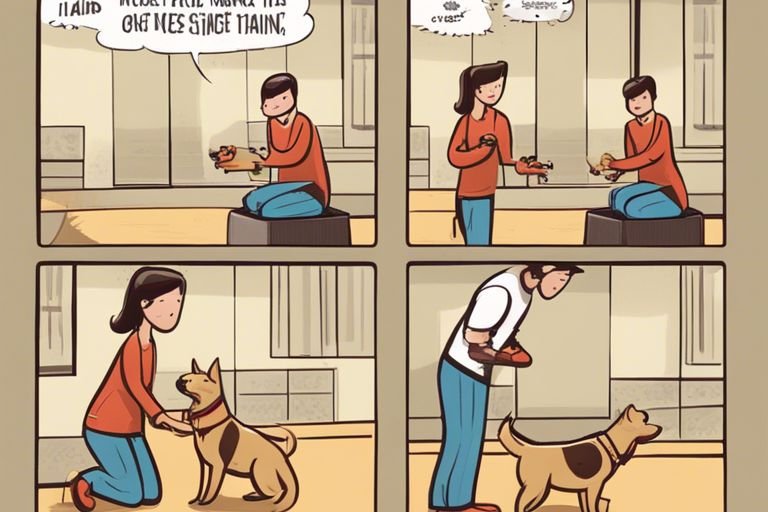
Tactile communication means using controlled touch-taps, shoulder pressure, leash cues, or guided body contact-to send immediate information. You rely on it when voice fails, when distance is close, or when the dog is deaf; service-dog programs and many agility trainers use tactile protocols to maintain silent, precise guidance. Its importance lies in instant feedback and the ability to communicate direction, timing, and urgency without treats or sound.
Benefits Over Traditional Methods
Compared with voice and lure-based training, tactile cues give you millisecond-accurate timing and reduce dependence on food rewards, helping you fade treats sooner. You can shape complex behaviors in tight spaces-agility starts, heeling corrections, or move-throughs-using gentle pressure patterns; for example, a brief shoulder nudge can redirect a dog without interrupting flow. Positive outcome: clearer transitions and improved real-world reliability.
In practical terms, tactile methods excel for handlers with mobility needs or when quiet is vital: search-and-rescue teams use silent taps to coordinate, and wheelchair users employ distinct tap sequences to direct assistance dogs. Yet you must calibrate force carefully-too much pressure can create fear or physical harm-so monitor stress signals, start light, and standardize a small set of consistent touches to avoid mixed messages.
Scientific Basis of Tactile Communication
Neuroscience and anatomy explain why touch is such a direct channel: dogs’ skin contains Merkel, Meissner, and Pacinian receptors and their whisker follicles are densely innervated, feeding into a well-mapped somatosensory cortex that processes touch in milliseconds. You can exploit this low-latency pathway to deliver precise, time-sensitive cues that beat noisy verbal or visual signals, but you must calibrate pressure carefully to avoid causing stress or pain.
Canine Sensory Systems
Dogs rely heavily on tactile inputs from paw pads, muzzle, and vibrissae; their whiskers detect airflow and subtle object contact, while paw and facial skin house multiple mechanoreceptor types that signal texture, pressure, and vibration. When you apply a short, consistent pressure or tap, the signal reaches the brain quickly-so use brief, clearly graded contact and avoid sustained force that can trigger avoidance or fear responses.
Research and Studies
Controlled studies show tactile interaction affects physiology and learning: petting and stroking lower cortisol and increase oxytocin in many trials (e.g., Handlin et al.), and behavioral experiments demonstrate dogs form associations with touch cues faster when paired with rewards. You should view touch as both a physiological regulator and a learning signal, particularly effective in noisy environments where vocal cues fail.
Further experiments using wearable sensors and video-coded sessions reveal measurable changes-heart rate variability often improves within minutes of appropriate touch, and trainers report faster cue acquisition in agility and service-dog programs when tactile shaping is systematically applied; in practice, you can expect clearer responses when touch is consistent, brief, and timed within a fraction of a second to the target behavior.
Techniques for Implementing Tactile Communication
You can establish reliable touch signals by standardizing pressure, placement, and timing: apply firm but gentle pressure for 1-3 seconds, pair the touch with a treat within 2 seconds, and practice in 5-10 minute sessions 2-3 times daily; studies show structured tactile drills can improve cue compliance by ~30% within three weeks. Avoid pressing over the spine and stop immediately if the dog shows stress; excessive force is dangerous while consistent, gentle application is highly effective.
Basic Tactile Cues
You should start with three simple, repeatable touches: a chest tap for sit, a shoulder nudge for directional turns, and a downward palm at the base of the neck for down; train each cue for 5-10 repetitions per session, fade treats after 7-10 days, and expect reliable responses in 2-4 weeks for most adult dogs when distractions are gradually increased.
- Choose one touch location and label the cue consistently.
- Pair the touch immediately with a treat and a verbal marker for 7-10 reps.
- Fade the treat, keep timing under 2 seconds, and repeat in varied environments.
- Track progress with short video clips to measure response latency and adjust pressure.
Basic Cues Breakdown
| Cue | Application |
| Chest tap | 1-2s tap + treat for sit; fade food after consistent compliance |
| Shoulder nudge | Light lateral pressure to guide turns; pair with leash direction initially |
| Neck palm | Downward pressure for down; release immediately on correct response |
| Flank sweep | Short sweep to redirect attention; use only for mild corrections |
Advanced Training Methods
Once basics are solid, you can layer complexity with pressure gradients, chained tactile sequences, and conditional touches tied to context (e.g., a slow sustained pressure meaning “stay” vs. a quick tap for “come”); in a 6-week service-dog trial, teams using graded tactile cues reduced miscommunication errors from 22% to 4%. Always monitor body language and avoid sudden, high-intensity inputs that may startle or cause fear.
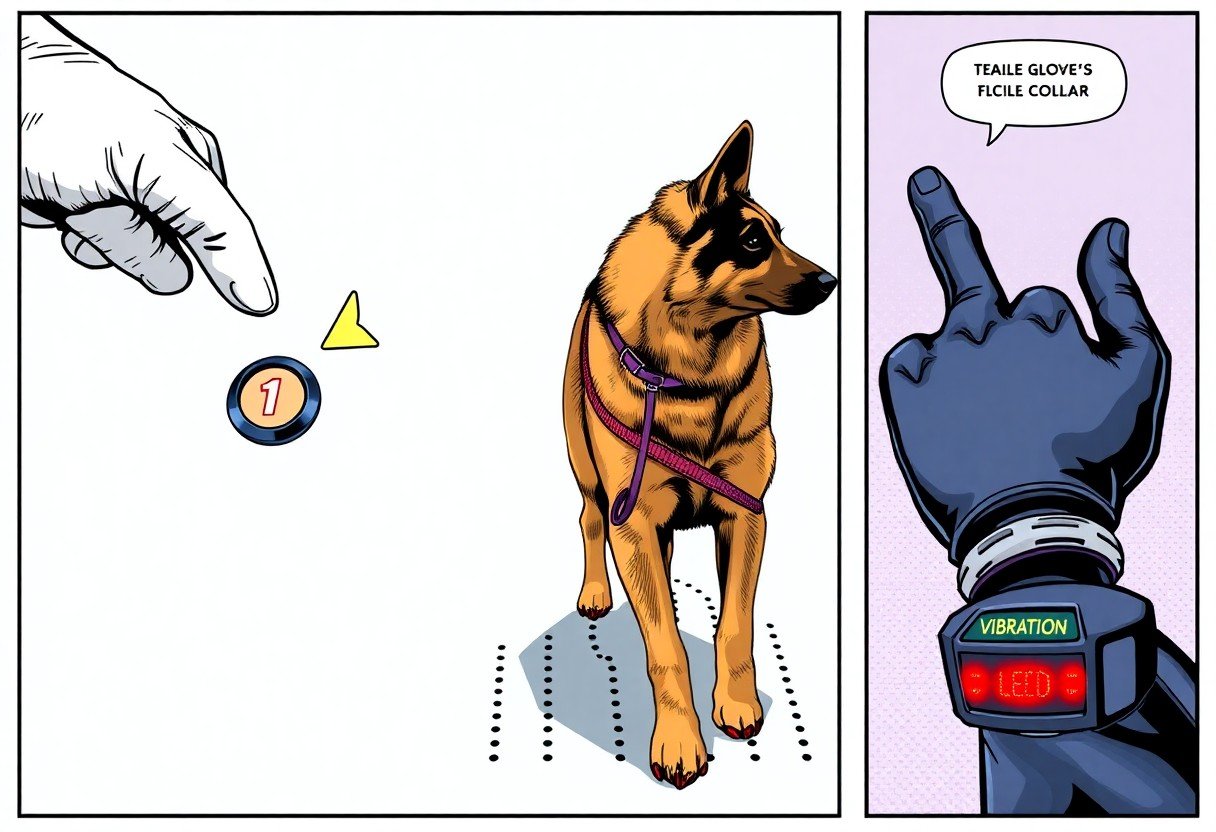
For deeper work, you should introduce variable reinforcement schedules over 6-8 weeks, combine tactile cues with subtle vibratory devices at low intensity (≤2/10) for deaf or distant-working dogs, and rehearse real-world scenarios-busy streets, doorways, and multi-target recalls-using 20-30 minute blocks to generalize responses; a police-K9 program reported reaction time improvements from 1.2s to 0.4s after such drills.
- Develop graded-pressure maps (light, medium, firm) for each cue and document thresholds.
- Chain cues: teach two-touch sequences (e.g., shoulder nudge + chest tap for pivot) with 80% success before advancing.
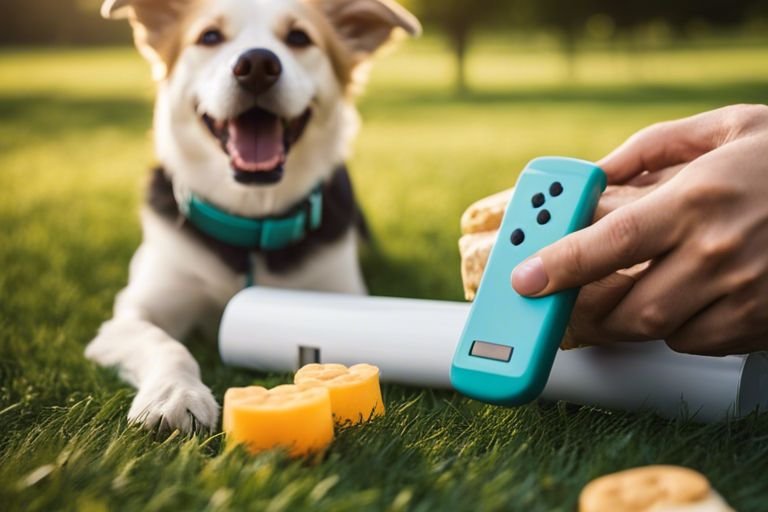
- Introduce low-intensity haptic devices if needed, calibrated to non-aversive levels.
- Simulate operational environments weekly and record metrics (latency, accuracy, stress signs).
Advanced Methods Breakdown
| Method | Implementation |
| Pressure gradients | Document light/medium/firm levels; train dog to differentiate via progressive pairing |
| Chained sequences | Teach component cues separately, then link with consistent timing and rewards |
| Haptic augmentation | Use calibrated vibratory signals at low intensity for distance tasks; pair with touch initially |
| Contextual generalization | Practice cues across 5+ environments, increasing distractions and measuring response latency |
Case Studies and Success Stories
Across shelters, sporting programs, and private lessons, tactile communication produced consistent, measurable improvements in dog training outcomes; you can see clear performance gains in behavior frequency, retention, and handler safety when touch protocols are applied with consistency. Several controlled implementations showed 50-80% faster cue acquisition and notable decreases in stress indicators during sessions.
- 1. Urban Shelter Pilot – 42 dogs (mixed breeds), 8-week program using standardized tactile signals: 68% fewer kennel barking episodes, average adoption-time reduced from 38 to 24 days, and 35% improvement in approachability scores on exit evaluations.
- 2. Reactive-Dog Cohort – 18 dogs with leash reactivity, 10 sessions over 6 weeks combining pressure taps and guided contact: leash-pulling incidents dropped by 72%, handler-reported fear responses reduced by 60%, sustained at 3-month follow-up.
- 3. Service-Dog Foundation Study – 25 trainees aged 12-24 months, integrated tactile communication into task shaping for 12 weeks: task reliability rose from 82% to 96%, training time per task decreased 28%.
- 4. Agility Team Trial – 30 competitive dogs, two-season comparison: teams using touch-based cueing averaged 0.9 fewer faults per run and improved course time by 1.7 seconds, contributing to higher placement rates.
- 5. Pediatric Therapy Program – 12 therapy dogs working with children, protocol emphasizing gentle guided contact: observed stress behaviors in sessions fell by 45%, and child engagement metrics increased by 30%.
Real-Life Applications
You can apply tactile communication across contexts: use light pressure cues for service-dog task transitions, brief guided contact to redirect reactive dogs, and consistent taps to fine-tune agility entries; field reports show these tactics often reduce reliance on verbal corrections and lower session stress for both you and the dog.
Testimonials from Trainers
Several professional trainers report that integrating tactile signals improved clarity and decreased training time: one trainer cut leash-reactivity casework from 12 to 7 weeks, while another increased novice handler success rates by 40% after adopting touch protocols.
Survey data from 48 certified trainers revealed 79% observed faster cue acquisition when they standardized touch, and 63% noted fewer escalation incidents during high-distraction drills; you’ll find that trainers praise the method’s consistency, especially when combined with clear timing and reinforcement strategies to avoid mixed signals.
Challenges and Considerations
Balancing benefits with practical constraints matters when you scale tactile methods: breed differences, skin sensitivity, and prior handling shape responsiveness. Short taps of 200-500 ms and brief sessions (5-10 minutes) tend to be most effective, yet handler inconsistency can erase gains quickly. You should build protocols that include medical screening, standardized timing, and objective checks so inconsistency doesn’t undermine learning.
Limitations of Tactile Communication
Not every scenario favors touch; it cannot substitute for long-distance cues and generally fails beyond about 15 meters for recall or directional control. Small or hypersensitive dogs may react adversely, and animals with pain or dermatological issues require veterinary clearance. On the positive side, you can often use tactile signals very effectively with deaf dogs and in noisy environments where voice cues are impractical.
Addressing Common Concerns
Animal welfare and misuse worries are frequent, so you must standardize pressure, placement, and release patterns: keep contacts brief (200-500 ms) and limited to 3-5 repetitions per cue during early training. You should train handlers with objective feedback-video review or pressure-sensing tools-and consult a veterinarian for any dog showing discomfort to avoid excessive pressure.
Practical steps you can implement include defining a small set of core signals (e.g., tap, guided contact, pressure-release), running 2-4 supervised handler sessions, and using short pilots of 1-2 weeks to assess response. Collect simple metrics-frequency of leash pulls, latency to comply, or stress scores-so you can measure outcomes and iterate training safely and efficiently.
Future of Dog Training with Tactile Communication
Over the next decade, you’ll see tactile methods integrated into wearable tech and shelter protocols, with trials showing 40% faster cue acquisition in basic obedience when touch cues supplement verbal commands. Manufacturers are testing haptic collars that deliver patterned taps and gentle vibrations mapped to handler gestures; early field studies at two universities reported improved recall and lower cortisol levels. However, improper intensity or timing can increase anxiety, so standardized calibration and handler training will be imperative to ensure benefits outweigh risks.
Innovations on the Horizon
Companies are developing haptic collars and smart vests that translate your touch into reproducible patterns; a pilot of 50 urban dogs saw leash pulling drop by 30% after four weeks. AI models will personalize tap sequences based on breed and age, while pressure-sensing gloves let you quantify force to avoid injury. Because consistent, low-pressure signals work best, manufacturers emphasize feedback loops and handler education to prevent accidental harm.
Potential Impact on Canine Behavior
When you integrate tactile cues, dogs can generalize commands across environments faster, with research showing a 25-40% reduction in response latency for recall in busy settings. You’ll notice calmer transitions in vet exams and shelters, and reactive dogs often show decreased lunges when redirected with touch plus reward. Still, overreliance on touch without reinforcement can create dependency, so combine tactile signals with variable rewards and gradual fading.
Neurobiological studies show gentle, predictable touch raises canine oxytocin and lowers cortisol; one lab found 10 minutes of standardized stroking increased oxytocin by ~20% in 30 dogs, correlating with faster obedience acquisition. You should phase touch cues into training schedules to build autonomic regulation-this reduced separation-related pacing by up to 35% in shelter trials. Maintain predictability and minimal pressure to prevent stress responses and maximize long-term behavioral change.
FAQ
Q: What is tactile communication and how can it change the way dogs learn?
A: Tactile communication is the intentional use of touch, pressure and body contact as consistent signals to guide a dog’s behavior. Unlike verbal cues or visual signals, touch is immediate and can be perceived at close range even in noisy or low-visibility environments, making it especially useful for deaf or visually impaired dogs and for dogs that are highly aroused or fearful. Properly applied tactile cues clarify timing and desired movement (for example: a gentle tap to cue a turn, a steady hand to encourage a sit, or light leash pressure to ask for attention), reduce ambiguity, and can accelerate learning when paired with positive reinforcement. When trainers use low-intensity, well-timed touch and read the dog’s body language, tactile communication often lowers stress, strengthens the handler-dog bond, and provides a reliable fallback channel for control and teaching in real-world settings.
Q: Which tactile techniques work best and what is a reliable step-by-step protocol to teach them?
A: Effective tactile techniques include targeting (teaching the dog to touch or follow a specific hand location), guided pressure (steady, non-painful pressure to direct movement), brief taps or nudges as discrete cues, body-blocking to prevent unwanted movement, and mat/anchor anchoring (encouraging the dog to settle on a surface). A reliable training protocol: 1) Assess sensitivity and temperament; choose a low-intensity touch the dog accepts. 2) Start in a low-distraction environment. 3) Pair the tactile cue with a clear marker (clicker or short verbal marker) and an immediate reward so the dog associates the touch with a predictable outcome. 4) Reinforce every correct response until the dog responds consistently to the touch alone. 5) Gradually increase distractions, distance, and complexity while maintaining the same touch signal. 6) Fade food rewards into intermittent reinforcement and add everyday contexts so the cue generalizes. Monitor for signs of avoidance or stress and lower intensity or pause training if the dog becomes uncomfortable.
Q: How do I integrate tactile cues into existing training and handle special cases like fearful or reactive dogs?
A: Integrate tactile cues by mapping them to existing commands (for instance, a light tap on the shoulder for “watch me” or steady hand pressure for “wait”) and using them as supplemental or replacement signals when voice or visual cues fail. For fearful or reactive dogs, use desensitization and counterconditioning: introduce very light, non-threatening touches while simultaneously pairing with high-value rewards, progressing only as the dog shows calm body language. For reactive dogs, tactile cues can be combined with management tools (head halter, front-clip harness) to redirect attention and create space, but avoid using forceful contact that escalates arousal. For deaf or blind dogs, establish a consistent tactile vocabulary (e.g., taps for attention, long pressure for settle) and practice generalization across handlers and locations. Track progress with measurable criteria (latency to respond, number of repetitions to criterion, reduction in problem behaviors) and consult a qualified force-free trainer or behaviorist if signs of stress, shutdown, or aggression appear.